How widely is blue.sprint used across your projects?
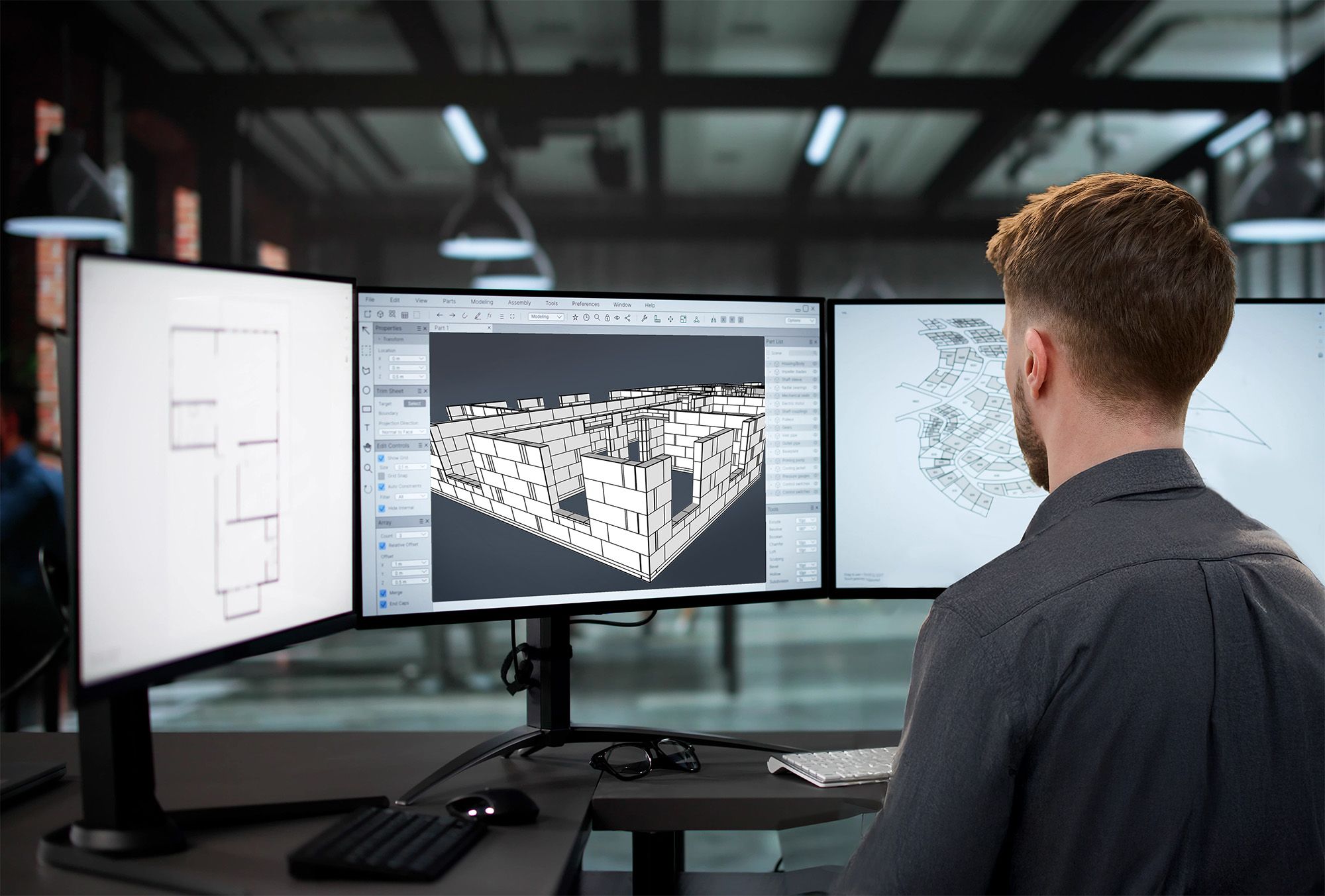
In some countries, such as the Netherlands and Belgium, blue.sprint adoption among large-format projects is particularly high. Countries such as Italy, France, and Austria bring up the rear, where our small and medium formats tend to be used. We mainly use blue.sprint for large formats because we plan these ourselves. Small formats are simply cut to size on the construction site.
Why is blue.sprint not yet in widespread use, even in countries where acceptance is high?
This is because many projects in these markets are handled through free trade.
In most markets, pure material distribution is very common, especially for single-family home construction. Naturally, we are not usually involved in planning such comparatively small projects.
Why has blue.sprint adoption grown so strongly?
On the one hand, this reflects the current trend – an increasing number of companies are working with BIM and want digital exchange. We are growing alongside the market.
In some countries, legislation is also driving digitalization: in Scandinavia, for example, public projects of a certain size must be planned using BIM. Consequently, planners are embracing digitalization so they can process all orders uniformly, whether it's a kindergarten, social housing construction or a project with a private investor.
What has surprised you most since the project began in 2018?
For me, the biggest surprise was the development in Poland. For a long time, we only sold small and medium formats there. However, with the introduction of large formats, the team hired Pawel Górski, an engineer and BIM manager. As they were able to plan the new formats directly themselves, the market went up significantly.
How do you manage to get all countries on board?
One of the first steps was the appointment of a BIM representative in each country, or, as in Poland, the hiring of someone for this role. It is important to have someone present at customer meetings who can demonstrate our capabilities. Otherwise, effective communication is key. Initially, we were often on site in the countries or invited people to our headquarters in Duisburg.
What do customers particularly appreciate about working with blue.sprint?
They notice how little communication is needed for clean planning. They save money thanks to our optimization and receive their quotes faster and way more detailed than ever before. This explains the perfect growth figures in Denmark this year. They have increased their volume almost 50 percent. Blue.sprint is therefore also a tool for building customer loyalty, as it almost always leads to follow-up orders.
Can such a best practice example be transferred to other countries?
It's not that simple because the markets are very specific. Nevertheless, synergies arise time and again: we have now established that countries with similar portfolios collaborate closely. In Poland's case, these were the Czech Republic and Slovakia. Germany and Belgium have learned a lot from the Netherlands. We constantly refer to case studies, because otherwise we all focus too much on our own market. This also stimulates communication.
What are the biggest challenges at the moment?
Many customers currently have to rely on smaller formats again, as evidenced by the rising numbers for these formats at our company. Due to the tense market situation, retaining employees is the top priority for many companies. Once the market volume grows again, we will have even greater growth opportunities.
What do you see as the drivers for the coming years?
I am optimistic about the next three to five years because we have enough leeway before reaching our capacity limits. I see full order books, especially in Central European countries. Demand is currently lower in Eastern Europe because financing construction projects there is very costly.
To what extent do you use artificial intelligence in blue.sprint?
We developed our own AI tool in AAC for Xella Germany. Instead of drafters optimizing every detail manually, the AI now does this continuously for entire wall models, even in the early planning phase. Because it optimizes continuously, customers save more material and money. We are currently testing this tool for YTONG system wall elements. Rolling it out to other product lines is something we are currently looking into.